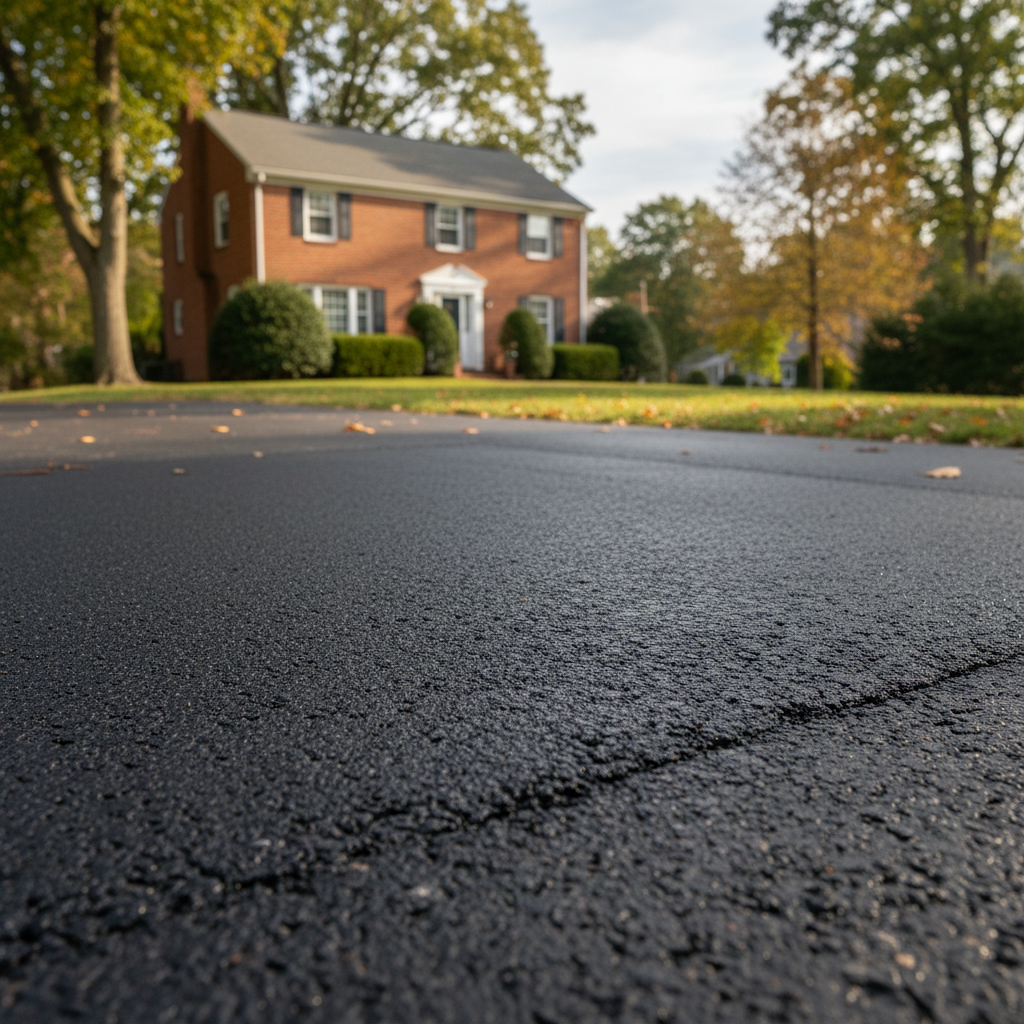
Your driveway's looking a bit rough, isn't it? I get calls all the time from folks right here in Folcroft, worried about cracks, potholes, or just the general wear and tear on their asphalt. It's a big investment, and you want it to last. So, I figured I'd tackle some of the questions I hear most often. No fancy talk, just what you need to know.
What's the difference between crack filling and sealcoating? Do I need both?
Yeah, people get these mixed up a lot. Think of crack filling as surgery and sealcoating as a protective skin. Crack filling is exactly what it sounds like: we clean out individual cracks – the ones that are usually a quarter-inch wide or more – and fill them with a hot, rubberized material. This stuff expands and contracts with the pavement, so it seals out water. Water is asphalt's biggest enemy. It gets in, freezes, expands, and then boom, you've got a pothole. So, crack filling is crucial for stopping that process.
Sealcoating, on the other hand, is a thin liquid layer we put over your driveway's entire surface. It's like sunscreen for your asphalt. This protects against UV rays, oil spills, and general weathering. Plus, it brings back that nice dark black color, making your driveway look new again. You absolutely need both. You fill the cracks first to stop water from getting in, then you sealcoat to protect the surface and make it last longer. Doing one without the other? It's like patching a hole in your roof but not putting shingles back on.
How often should I really be repairing my asphalt driveway?
This isn't a one-size-fits-all answer, but generally, for a residential driveway, you're looking at crack filling as needed – usually when you start seeing those quarter-inch cracks pop up. Don't wait until they're huge. A good rule of thumb for sealcoating is every two to three years. Some folks push it to four, especially if their driveway doesn't get a lot of sun or heavy traffic. But waiting too long means the sun and weather really start to break down the binder in the asphalt, leading to more cracks and a shorter overall lifespan for your driveway. Here in Folcroft, with our freeze-thaw cycles and sometimes harsh winters, staying on top of it every couple of years really pays off.
Can I fix small potholes myself, or should I always call a pro?
You can definitely tackle really small, shallow potholes yourself if you're handy. There are cold patch products you can buy at hardware stores. You clean out the hole, pour in the patch, and tamp it down. For a temporary fix, it's fine. But here's the catch: cold patch isn't as durable as hot asphalt, and it often doesn't bond as well to the existing pavement. For anything larger than a dinner plate, or if the pothole is deep, you really should call a professional. We've got the right equipment to cut out the damaged section, prepare the base properly, and use hot asphalt that will bond seamlessly and last a lot longer. Trying to DIY a big one often leads to it failing quickly, and then you're paying twice.
What causes asphalt driveways to crack and crumble in the first place?
A few main culprits are usually to blame. First, water. I can't stress this enough. Water gets into tiny cracks, freezes, expands, and pushes the asphalt apart. When it thaws, it leaves a void, and the asphalt weakens. Repeat that cycle a few times, and you've got a big problem. Second, UV rays from the sun. They dry out the asphalt binder, making it brittle and prone to cracking. Third, heavy loads. If you've got heavy trucks or RVs frequently parked on your driveway, that's a lot of stress on the pavement. And finally, the base. If the gravel base underneath your asphalt wasn't properly prepared or drains poorly, the asphalt on top won't last, no matter how good it is. We see a lot of older homes around the Delmar Drive area where the original driveways were put down without a really solid base, and those tend to show wear faster.
How long does asphalt repair usually take, and can I use my driveway right away?
For most residential repair jobs – crack filling and sealcoating – we can usually get it done in a single day, sometimes even just a few hours depending on the size of your driveway. The biggest thing you need to know is that you can't drive on it right away. For sealcoating, you're generally looking at 24 to 48 hours of cure time before you can drive on it, and sometimes longer if it's humid or cooler. We'll always give you a specific timeframe when we're done. Driving on it too soon can leave tire marks and damage the fresh sealcoat, which defeats the purpose. For crack filling, you can usually drive on it sooner, often within a few hours, but we'll let you know the exact timing for the specific material we use.
Is it better to repair my old driveway or just replace it entirely?
That's the million-dollar question, isn't it? It really comes down to how bad the damage is. If your driveway has isolated cracks, a few potholes, or just looks faded, repairs like crack filling and sealcoating can add years to its life at a fraction of the cost of replacement. We're talking about preventative maintenance here. However, if your driveway has widespread alligator cracking (it looks like alligator skin), significant heaving or sinking, large areas of crumbling, or if the base itself is failing, then repairs are just a band-aid. You'd be throwing good money after bad. At that point, a full replacement is usually the more cost-effective long-term solution. I'll always give you an honest assessment. Sometimes, it's a tough call, but we'll walk you through the options and what makes the most sense for your specific situation and budget. At Superior Asphalt Solutions, we believe in giving you the real picture, not just selling you the most expensive option.
What can I do to extend the life of my newly repaired or paved driveway?
Once you've invested in repairs or a new driveway, you want to protect that investment. First, keep it clean. Sweep off dirt, leaves, and debris regularly. Don't let oil or gas spills sit; clean them up quickly with an absorbent material. Second, avoid parking heavy vehicles in the same spot all the time, especially if it's a new driveway. Try to spread the load around. Third, keep an eye on drainage. Make sure water isn't pooling on your driveway. If you've got downspouts dumping water onto the asphalt, consider extending them. And finally, stick to a regular maintenance schedule. That means crack filling as new cracks appear and sealcoating every 2-3 years. It's like getting oil changes for your car; it prevents bigger, more expensive problems down the road.